Cost for Siding Installation: A Comprehensive Guide to Understanding Expenses
Delving into the realm of cost for siding installation, this introductory paragraph aims to provide a captivating overview of the various factors and considerations that influence the overall expenses involved in this home improvement project.
Exploring the intricacies of siding materials, labor costs, and budgeting strategies, this guide will equip you with valuable insights to make informed decisions for your siding installation needs.
Factors Affecting Siding Installation Costs

When considering the cost of siding installation, several factors come into play that can influence the overall expenses involved. Understanding these factors can help homeowners make informed decisions regarding their siding project.
Types of Siding Materials and Cost Implications
Different types of siding materials come with varying costs that can significantly impact the overall installation expenses. Here are some common siding materials and their cost implications:
- Vinyl Siding: Vinyl siding is one of the most affordable options, making it a popular choice for many homeowners looking to keep costs down.
- Fiber Cement Siding: Fiber cement siding is a durable and low-maintenance option that falls in the mid-range in terms of cost.
- Wood Siding: Wood siding can vary in price depending on the type of wood used, with cedar and redwood typically costing more than other options.
- Composite Siding: Composite siding is a newer option that combines various materials, offering a range of prices depending on the quality and brand.
Size and Layout of the House
The size and layout of a house play a significant role in determining the overall cost of siding installation. Larger homes will require more materials and labor, leading to higher expenses. Additionally, houses with complex layouts or architectural features may require extra time and effort to install siding properly, further adding to the total cost.
Additional Features Impacting Total Cost
In addition to the siding material and house size, several other features can impact the total cost of installation:
- Insulation: Adding insulation to the siding project can increase the upfront cost but provide long-term energy savings.
- Trim Work: Intricate trim work or custom details will add to the labor costs of installation.
- Labor Costs: The cost of labor can vary depending on the location, contractor, and complexity of the project, so it's essential to consider this aspect when budgeting for siding installation.
Cost Comparison of Various Siding Materials
When it comes to selecting siding materials for your home, cost is a significant factor to consider. Different siding materials come with varying installation costs, durability, and maintenance requirements. Let's compare the average cost per square foot of popular siding materials like vinyl, wood, fiber cement, and metal, and examine how these costs relate to their durability and maintenance needs.
Vinyl Siding
Vinyl siding is one of the most affordable options, with an average cost of $2 to $7 per square foot for materials and installation. It is a low-maintenance material that does not require painting, but it may fade over time and is susceptible to cracking in extreme weather conditions.
Wood Siding
Wood siding has a higher average cost of $6 to $12 per square foot for materials and installation. It offers a natural and timeless look but requires regular maintenance like painting or staining to prevent rot and insect damage.
Fiber Cement Siding
Fiber cement siding falls in the mid-range with an average cost of $6 to $12 per square foot for materials and installation. It is durable, fire-resistant, and low-maintenance, making it a popular choice for many homeowners.
Metal Siding
Metal siding is on the higher end of the cost spectrum, ranging from $8 to $16 per square foot for materials and installation. It is extremely durable, weather-resistant, and requires minimal maintenance, offering long-term cost savings in terms of upkeep and repairs.Each siding material comes with its own set of pros and cons, including upfront costs, durability, and maintenance requirements.
Consider your budget and long-term goals when choosing the right siding material for your home.
Labor Costs and Installation Considerations
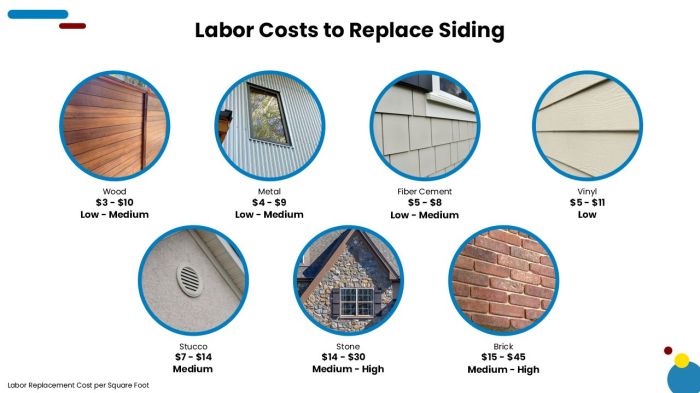
When it comes to siding installation, labor costs play a significant role in determining the overall expenses. Professional installers are essential for a successful and efficient installation process, ensuring that the siding is properly installed to enhance the durability and appearance of your home.
Typical Labor Costs and Calculation
- Labor costs for siding installation are typically calculated based on the square footage of the area to be covered. Installers may charge per square foot or provide a flat rate for the entire project.
- Additional factors such as the complexity of the installation, accessibility of the site, and the type of siding material can also influence labor costs.
- It is important to obtain multiple quotes from reputable installers to compare labor costs and ensure that you are getting a fair price for the services provided.
Importance of Hiring Professional Installers
- Professional installers have the expertise and experience to handle various siding materials and installation techniques effectively.
- Their knowledge ensures that the siding is installed correctly, minimizing the risk of future issues and costly repairs.
- While hiring professional installers may seem like an additional expense, their expertise can ultimately save you money in the long run by avoiding potential installation errors.
Additional Factors Contributing to Installation Costs
- Permits: Some areas may require permits for siding installation, which can add to the total cost of the project.
- Disposal of Old Materials: Proper disposal of old siding materials may incur additional fees, depending on the amount and type of waste generated.
- Cleanup Costs: After the installation is complete, cleanup costs for debris and construction materials should be factored into the total installation cost.
Cost-Saving Tips and Budgeting Strategies

When it comes to saving money on siding installation, there are several strategies homeowners can employ to keep costs down without sacrificing quality. By planning ahead, exploring financing options, and making informed decisions, you can ensure a successful and budget-friendly siding project.
Plan Ahead and Compare Quotes
Before starting your siding installation project, it's essential to plan ahead and gather multiple quotes from different contractors. By comparing prices and services offered, you can ensure you're getting the best value for your money. Additionally, planning ahead allows you to schedule the project during off-peak seasons when contractors may offer discounts or promotions.
Choose Cost-Effective Materials
When selecting siding materials, consider the cost-effectiveness of each option. While premium materials may offer durability and aesthetic appeal, more budget-friendly alternatives can still provide quality and performance at a lower price point. Vinyl and fiber cement siding are popular choices that offer a good balance between cost and durability.
DIY vs. Professional Installation
One way to save on labor costs is to consider whether you can tackle some of the installation work yourself. While siding installation can be complex and time-consuming, homeowners with adequate skills and tools may be able to handle certain aspects of the project, such as removal of old siding or preparation work.
However, it's essential to weigh the cost savings against the potential risks of DIY installation.
Exploring Financing Options
If the upfront cost of siding installation is a concern, exploring financing options can help make the project more manageable. Some contractors offer financing plans or payment options that allow homeowners to spread out the cost over time. Additionally, there may be government incentives or rebates available for energy-efficient siding installations, which can help offset the overall cost.
Closing Summary
In conclusion, the cost for siding installation encompasses a multitude of factors that impact the overall expenses. By understanding the nuances of material costs, labor considerations, and cost-saving tips, homeowners can navigate this process with confidence and financial prudence.
Quick FAQs
What factors influence siding installation costs?
Factors such as the type of siding material, house size, additional features like insulation, trim work, and labor costs can all affect the total cost of siding installation.
How can homeowners reduce siding installation costs?
Homeowners can reduce costs by opting for cost-effective siding materials, comparing quotes from different installers, and planning the project efficiently to avoid unexpected expenses.
Why is it important to hire professional installers?
Professional installers bring expertise to the project, ensuring proper installation that can prevent costly repairs down the line, ultimately saving homeowners money in the long run.